The flood wall in Wellsville is now covered with beautiful, historic murals, painted by artist Gina Hampson. The Wellsville Revitalization Committee started this mural project in the summer of 2005. In the background is Route 7. (From “POW” People Of Wellsville, Ohio Blog)
In the first installment of “Rock Springs Park: My Field of Dreams,” the writer began his story of a recent trip from Western Pennsylvania to a book talk and signing event in Wellsville, Ohio. Stopping, along the way, in his hometown of Chester, West Virginia, to deliver a signed copy of "Images of America: Rock Springs Park" to book contributor Sayre W. Graham, Sr., a retired general contractor who worked maintenance on the octagonal carousel pavilion and other structures in the park. At the end of Part I, the author had departed Graham’s home, unsuccessful in his attempted delivery, and was navigating the streets of downtown East Liverpool just across the river in search of Route 7 south to Wellsville.
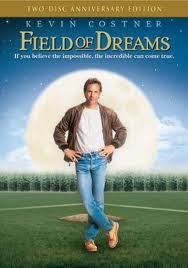
Webber Way in East Liverpool became Route 7 South immediately after crossing under Route 30. The City of Wellsville, to my surprise, was only 2 miles away; it seemed like a much longer trip when I was a kid. Like Kevin Costner’s character, Ray Kinsella, on his own road trip in Field of Dreams, I was in need of a little positive "karma" at that moment and since I was taught to never pick up hitchhikers like Ray does in the film, I simply turned up the volume on sports talk radio. The hosts were replaying an earlier interview with Pittsburgh Steelers’ safety, Ryan Clark, as I entered North Wellsville, driving across a small bridge bordered on both sides with cement railings painted white and continuing through a large open gate in a flood wall.
The city of Wellsville, which had its beginnings before Ohio became a state, lies just south of Route 7 at the foot of a mountain and only slightly above the flowing waters of the Ohio River. A single railroad line runs parallel to the city along the river’s edge; a line Wellsville historians claim President Abraham Lincoln traveled on from his home state of Illinois back to Washington D.C. in 1865 for his second inauguration.
 Wellsville was one of the stops on President Abraham Lincoln's journey back to Washington for his second inauguration. A parade was held, in Wellsville, OH, many people gathered, and President Lincoln spoke from the rear platform of the train, to the assembled crowd, both for and against him. One man spoke up and said that he never voted for Mr. Lincoln. Lincoln spoke to him and shook his hand. (From Amy’s Art Blog)
The need for a flood wall became immediately obvious as I took in the geography of Wellsville. It sits on the northernmost curve of the Ohio just as the river begins to turn south. The city itself is built on a raised mound of earth having a long lower basin that borders it to the north. I could imagine a swell of river water bearing down on the town like a an inexperienced baseball player choosing the wrong angle rounding second, losing his balance, and tumbling out of control. Water following a similar path, without a flood wall, would quickly fill the basin and eventually flood the entire town in only a few brief hours. On this particular February evening, the Ohio was actually cresting near flood stage due to melting snow and recent thunderstorms, the same combination which led to the "big flood" of 1936, a notorious disaster which affected cities and villages all along the Ohio from Pittsburgh to Cincinnati beginning on St. Patrick’s Day 1936; a flood which prompted the construction of the first and only million-dollar flood wall ever built on the upper Ohio River.
Costner, with his karma increased thanks to a young hitchhiker named Archie Graham cruises happily to the tune of an Allman Brothers’ rock instrumental, but I foolishly chose to continue listening to talk radio and Ryan Clark voicing his laundry list of post-season concerns. The conversation shifted to the 900-pound gorilla in the studio - the potential lockout if negotiations between NFL owners and players did not improve in the next few days. Typically, as a member of a collective bargaining unit and concerned about the current situation in Wisconsin, I would fall on the side of labor in such a dispute. But Clark’s argument about the lack of equity in players’ salaries, even though intelligent and well-measured, fell on deaf ears as I drove through Wellsville, Ohio. Especially when I saw a rundown house on First Street still decked out in Steelers’ regalia from January’s Super Bowl loss. The house was covered in black and gold, including Steelers’ bed sheets hanging in the windows. As Clark was asking for sympathy for young players making a mere $380,000 a year, I was looking at a fan’s house who was obviously struggling just to make ends meet, a guy with a median household income of probably close to $25,000, if that, who would no doubt have to work fifteen more years just to make what a practice squad player earns in his first year. Suddenly, the plight of NFL player and owners seemed vainglorious and unimportant, especially when considering the ghosts in "Field of Dreams" played professional ball for "food money."
My self-led driving tour of downtown Wellsville, population 3,881, including the grand Victorian homes homes along Riverside Avenue was complete in about 15 minutes, so I found my way to the parking lot of the First Christian Church on Main Street with a half hour to spare before I was scheduled to meet "Phyllis," one of the Arts Club members who had volunteered to come 30 minutes early so I could set up all my equipment. I took the opportunity to pull out my notes regarding Wellsville's connection to Rock Springs Park. Dozens of area newspapers recount that businesses in small towns all along the Ohio River and beyond would close down completely once a year in the 1900's for all-day excursion to the park, but Wellsville, Ohio, had a much deeper connection than just that, one which I had only been recently reminded of while reading an obituary in the Youngstown Vindicator dated October 14, 1953.
 One of the large homes along Riverside Avenue is Wellsville Historical Society River Museum. (From Wellsville Area Chamber of Commerce)