About Me

Friday, March 4, 2011

Rock Springs Park: My Field of Dreams (Part II)

The flood wall in Wellsville is now covered with beautiful, historic murals, painted by artist Gina Hampson. The Wellsville Revitalization Committee started this mural project in the summer of 2005. In the background is Route 7. (From “POW” People Of Wellsville, Ohio Blog)


In the first installment of “Rock Springs Park: My Field of Dreams,” the writer began his story of a recent trip from Western Pennsylvania to a book talk and signing event in Wellsville, Ohio. Stopping, along the way, in his hometown of Chester, West Virginia, to deliver a signed copy of "Images of America: Rock Springs Park" to book contributor Sayre W. Graham, Sr., a retired general contractor who worked maintenance on the octagonal carousel pavilion and other structures in the park. At the end of Part I, the author had departed Graham’s home, unsuccessful in his attempted delivery, and was navigating the streets of downtown East Liverpool just across the river in search of Route 7 south to Wellsville.

Webber Way in East Liverpool became Route 7 South immediately after crossing under Route 30. The City of Wellsville, to my surprise, was only 2 miles away; it seemed like a much longer trip when I was a kid. Like Kevin Costner’s character, Ray Kinsella, on his own road trip in Field of Dreams, I was in need of a little positive "karma" at that moment and since I was taught to never pick up hitchhikers like Ray does in the film, I simply turned up the volume on sports talk radio. The hosts were replaying an earlier interview with Pittsburgh Steelers’ safety, Ryan Clark, as I entered North Wellsville, driving across a small bridge bordered on both sides with cement railings painted white and continuing through a large open gate in a flood wall.

The city of Wellsville, which had its beginnings before Ohio became a state, lies just south of Route 7 at the foot of a mountain and only slightly above the flowing waters of the Ohio River. A single railroad line runs parallel to the city along the river’s edge; a line Wellsville historians claim President Abraham Lincoln traveled on from his home state of Illinois back to Washington D.C. in 1865 for his second inauguration.

Wellsville was one of the stops on President Abraham Lincoln's journey back to Washington for his second inauguration. A parade was held, in Wellsville, OH, many people gathered, and President Lincoln spoke from the rear platform of the train, to the assembled crowd, both for and against him. One man spoke up and said that he never voted for Mr. Lincoln. Lincoln spoke to him and shook his hand. (From Amy’s Art Blog)

The need for a flood wall became immediately obvious as I took in the geography of Wellsville. It sits on the northernmost curve of the Ohio just as the river begins to turn south. The city itself is built on a raised mound of earth having a long lower basin that borders it to the north. I could imagine a swell of river water bearing down on the town like a an inexperienced baseball player choosing the wrong angle rounding second, losing his balance, and tumbling out of control. Water following a similar path, without a flood wall, would quickly fill the basin and eventually flood the entire town in only a few brief hours. On this particular February evening, the Ohio was actually cresting near flood stage due to melting snow and recent thunderstorms, the same combination which led to the "big flood" of 1936, a notorious disaster which affected cities and villages all along the Ohio from Pittsburgh to Cincinnati beginning on St. Patrick’s Day 1936; a flood which prompted the construction of the first and only million-dollar flood wall ever built on the upper Ohio River.

Costner, with his karma increased thanks to a young hitchhiker named Archie Graham cruises happily to the tune of an Allman Brothers’ rock instrumental, but I foolishly chose to continue listening to talk radio and Ryan Clark voicing his laundry list of post-season concerns. The conversation shifted to the 900-pound gorilla in the studio - the potential lockout if negotiations between NFL owners and players did not improve in the next few days. Typically, as a member of a collective bargaining unit and concerned about the current situation in Wisconsin, I would fall on the side of labor in such a dispute. But Clark’s argument about the lack of equity in players’ salaries, even though intelligent and well-measured, fell on deaf ears as I drove through Wellsville, Ohio. Especially when I saw a rundown house on First Street still decked out in Steelers’ regalia from January’s Super Bowl loss. The house was covered in black and gold, including Steelers’ bed sheets hanging in the windows. As Clark was asking for sympathy for young players making a mere $380,000 a year, I was looking at a fan’s house who was obviously struggling just to make ends meet, a guy with a median household income of probably close to $25,000, if that, who would no doubt have to work fifteen more years just to make what a practice squad player earns in his first year. Suddenly, the plight of NFL player and owners seemed vainglorious and unimportant, especially when considering the ghosts in "Field of Dreams" played professional ball for "food money."

My self-led driving tour of downtown Wellsville, population 3,881, including the grand Victorian homes homes along Riverside Avenue was complete in about 15 minutes, so I found my way to the parking lot of the First Christian Church on Main Street with a half hour to spare before I was scheduled to meet "Phyllis," one of the Arts Club members who had volunteered to come 30 minutes early so I could set up all my equipment. I took the opportunity to pull out my notes regarding Wellsville's connection to Rock Springs Park. Dozens of area newspapers recount that businesses in small towns all along the Ohio River and beyond would close down completely once a year in the 1900's for all-day excursion to the park, but Wellsville, Ohio, had a much deeper connection than just that, one which I had only been recently reminded of while reading an obituary in the Youngstown Vindicator dated October 14, 1953.

One of the large homes along Riverside Avenue is Wellsville Historical Society River Museum. (From Wellsville Area Chamber of Commerce)

Wednesday, March 2, 2011

Rock Springs Park: My Field of Dreams (Part I)

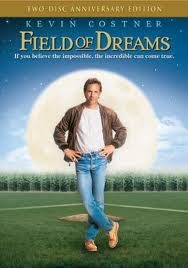
It’s usually about this time every year that I take out my copy of the 1989 baseball movie “Field of Dreams,” starring Kevin Costner, and pop it into the DVD player, in hopes that this “guy-cry film” will help me think spring and the start of baseball season. In it, Ray Kinsella (Costner), on a father quest which begins and ends in his own backyard in Iowa, or more precisely the farm in his front yard, plows under a couple of acres of his cash crop to build a baseball field after hearing a voice whisper “if you build it, he will come.” Later, James Earl Jones, as writer Terence Mann, explains in a prophetic monologue how Ray’s lost corn crop and looming bankruptcy are meaningless in the big scheme of things because “People will come.”

As it turns out, Ray’s “illogical” baseball field brings back his father’s long dead baseball heroes, but also draws thousands of tourists longing for their collective past, “an America that was once good, and could be again.” Terrance Mann concludes, “Of course, we won't mind if you look around. It's only $20 per person. They'll pass over the money without even thinking about it: for it is money they have and peace they lack. It'll be as if they dipped themselves in magic waters. The memories will be so thick they'll have to brush them away from their faces.”

Last night I left school and traveled to Wellsville, Ohio, a small town just 2 miles southwest of East Liverpool. In hopes of sharing a heavy dose of thick memories and “magic waters” of Rock Springs Park to the Women’s Arts Club in the social hall of the First Christian Church on Main Street, Wellsville, Ohio.

On the way through Chester, West Virginia, I planned on stopping to give a signed copy of my book to Sayre W. Graham, Sr., a retired general contractor, who allowed me to visit his home on Georgia Avenue last year and record his memories of living next to the park and working for the Findley Brothers Construction Company, contractors who built and maintained the octagonal carousel pavilion. Unfortunately, most of the stories Mr. Graham told me I could not use in the book, not because they weren’t good, but because I wasn’t sure if the statute of limitations had run out yet. Like the time he kidnapped a spare carousel horse from a storage shed behind the first drop of the Cyclone in 1974, only reluctantly returning it when questioned about its whereabouts by park owner Virginia Hand. Graham, like a lot of folks in town, didn’t want to see the antique horses sold off to a museum. Unlike most; he decided to do something about it. (Was he exaggerating, or was I in the presence of a real-life carousel horse thief?)

In the book (page 23), I noted that then-mayor Roy C. Cashdollar and Graham were instrumental in saving the World’s Largest Teapot in town, the Chester icon and roadside giant that now sits on former park property and greets people traveling through the northern panhandle of West Virginia from Pennsylvania and Ohio via Route 30 and the Jennings Randolph Bridge.

“I told ‘em,” Graham laughed. “That they should drag that sorry thing up to the top of the bridge and dump it in the river!”

It wasn’t the first time I had heard someone say that. Roy Cashdollar was heard to say the same thing at the time, according to one source. Although surprising, it’s no wonder the men who are credited with saving the teapot were discouraged at first by the prospect of doing so, especially when one studies the photographs of the dying giant prior to restoration (photos now on display in the Memory Lane showcase at the Chester Municipal Building). In them, the teapot is barely recognizable, dark brown and crumbling in an abandoned lot in the upper end of Chester. It seems to have returned to a shell of the huge wooden barrel it was originally, and looks nothing like the giant piece of pottery it was transformed into by William "Babe" Devon in 1938. But even if their initial response was negative, these two men, along with Councilman Frank DeCapio, offered to take responsibility for its rehabilitation.

I asked Mr. Graham if it was true that the lid ball atop of the teapot was really made of glass, something I read while researching local history. Graham smiled slyly and said, “Go over to Liverpool and take a close look at that those glass-domed lampposts they got over there - same size.” It was not an outright confession, but, well, you get the idea.

When I arrived early in Chester yesterday evening, I grabbed a book and a pen from the car and rang Mr. Graham’s doorbell, waiting for him call out to me from his back room, as he had done over a year ago. I tried a couple more times, listening closely at the door, but realized that I probably should have called first. As I turned to go I was reminded of Kevin Costner’s visit to Doc “Moonlight” Graham in “Field of Dreams;” a small town doctor Ray visits by travelling back in time to 1972. Doc Graham, played by Burt Lancaster, shares his story of getting into professional baseball and “coming this close” to his dream of getting a big league hit, before he was called back down to the minors. Did my visit with Sayre Graham last year really happen or was I time traveling? A silly thought: I had the notes to prove it and saw the restored park bench in his living room. Was he okay? I wondered next, startled into a slightly tilted reality. I left disappointed and worried.

On the way to his home, only moments earlier, I was excited about my surprise visit, and visualized showing Mr. Graham his name in the book and the credit to his efforts in restoring the teapot. I pictured him smiling with wet eyes as he turned the pages. Instead I left feeling alone and dejected. I even took note of the turkey buzzards circling over the neighborhood.

It occurred to me as I drove out of town how cold and lonely the whole trip felt. I crossed the newly painted battleship-gray Jennings Randolph Bridge, the same bridge which signaled the beginning of the end of Rock Springs Park, and meandered through the one-way streets of East Liverpool trying to remember how to get to Route 7 from downtown. Something I once could do blind-folded, but now struggled with, perhaps because the cobwebs of memories were building up in front of my own face. What’s gotten into you? I thought. This how you used to think when you visited the area, but not now.

Back home in Pennsylvania, I am surrounded by constant noise and activity in my daily life as an elementary school teacher and most especially while driving around with my two preschool age children in the backseat; but the silence in the car last night actually added to my confusion. At least Kevin Costner had James Earl Jones for his road trip down memory lane. Where was my wing man? I switched on talk radio.

I began to notice how old and run down things looked: C.A. Smith’s pottery was now a brown field, half razed and rusting; a sad fat Christmas tree with drooping red ribbons leaned awkwardly in the Diamond of downtown East Liverpool, and the buildings along the once brick and busy Webber Way looked tired with peeling facades revealing crumbling brickwork and rotting timbers beneath.

Did anybody in the area really care about an amusement park that had been gone for nearly 40 years, and more specifically a black and white paperback book about its history?

It was my hope a small group gathered in the First Christian Church on Main Street in Wellsville did.


The World’s Largest Teapot in Chester, WV. In the background is the main truss of the Jennings Randolph Bridge (left) and a rusting tower of TS&T Pottery (right).

Saturday, February 26, 2011

Getting There Was Half the Fun!


A pennant like this one could have been among the many prizes awarded on board the Senator, when folks from Rochester, PA and the surrounding area took their excursion steamboat to Rock Springs Park in 1940.

In my last blog post, I mentioned a Rochester steamboat excursion aboard the Senator to Rock Springs Park in 1940. What I didn’t include was the added description of a very long list of prizes which were to be awarded to the “fun-lovers” on board as they traveled along the Ohio River to "The Showcase of the East."

Beaver (PA) The Daily Times, June 20, 1940 – More prizes than Aunt Minnie’s jam ever won in the good old days of the County Fair! That is the good news for fun-lovers who will leave the Rochester Wharf Monday morning, July 8, at 9:30 o’clock on the excursion boat “Senator” for the annual boat ride and outing of the Rochester Board of Trade at Rock Springs Park.

An imposing list of prizes has been compiled with potential winners running the gamut of competition all the way from “jitterbugging” to the wearing of the loudest necktie.

Dancing on the boat will be enjoyed to Fate Marable’s Original Cotton Pickers who are still reported to be picking a pretty swingy brand of cotton.

FINE PRIZES OFFERED:

Following is the list of prizes to be awarded on the boat, and the various lines of competition from which the winners will be selected:

Tallest man on boat, dinner; tallest woman, dinner; shortest man, dinner; shortest woman, dinner; youngest baby on boat, upholstered rocker; boy with the most freckles, gallon ice cream; girl with most freckles, pair slippers; largest family, easy cut ham; newest married couple, electric toaster; oldest married couple, one year subscription to DAILY TIMES; oldest Man, basket fruit; oldest lady, basket groceries; boy with longest hair, box candy; girl with longest hair, purse; fattest boy, polo shirt; fattest girl, box candy; youngest twins, box candy; oldest twins, ham; couple coming farthest distance, electric iron; person wearing loudest necktie, straw hat; most novel dressed boy, dress shirt; most novel dressed girl, pair hose; best dancing couple, $2.50 in cash; longest married couple, porch tea wagon; boy with reddest hair, straw hat; girl with reddest hair, slack suit; man with biggest head, hat cleaned; man with oldest car, grease job; woman with oldest car, grease job; best jitterbug, $2.50 in cash; youngest married couple, coffee table; best dressed boy, pair tennis shoes; best dressed girl, pair tennis shoes.

OTHER AWARDS

The following prizes will also be awarded to various persons on the boat en route to the park: Japanese Garden, $2.00 in cash, coffee percolator, cleaning one hat, dinner, 2 pennants, hand bag, polo shirt, straw hat, carton cigarettes, suit pressed, polo shirt, billfold, razor, ladies’ umbrella, water set, table lamp, set Fiesta Ware, brake adjustment, 3lbs. Coffee, 10 bu. Coal, ham, set ice tea glasses, sack flour.

It's funny to imagine how some of these prizes were identified with the recipients. I get how “the youngest married couple” might enjoy a new “coffee table,” or how a man or woman with the “oldest cars” might need a “grease job;” but the “boy with the most freckles” a “gallon of ice cream” or the person wearing the “loudest necktie” a “straw hat”? I’m not sure about those. And, in a world of political correctness, some of these categories would not go over well today and might seem somewhat mean spirited.

Local Pharmacies Were Ticket Agents for Excursions to Rock Springs Park

Being from a family who owned more than half a dozen drugstores in the Tri-State Area (Herche's Rexall), it was interesting to discover, while reading The Beaver Daily Times, June 28, 1940, that local businesses, including many pharmacies, acted as ticket agents for steamboat excursions to Rock Springs.


Rochester, PA – Fun-lovers will leave the Rochester wharf Monday morning, July 8, at 9:30 on the excursion boat “Senator” for the annual boat ride and outing of the Rochester Board of Trade at Rock Springs Park. A capacity crowd of 3,000 people is expected to make the boat trip to the park. Roy Fisher, chairman of the ticket committee, has established convenient agencies at which tickets can be obtained. Get your tickets before Monday. None will be sold at the boat. Here are the established ticket agencies. Go get’em now!

Rochester - Powell’s Grocery, Hetzel’s Drug Store, Gordon’s Pharmacy (see tin), Kunsman Brothers, Clyde Batto market, Paul Huth, Campbell’s Confectionary; Freedom – Hartzel Furniture Company (see video); Bridgewater – Bruehl’s News Agency; Beaver - Bloom’s Pharmacy; New Brighton – Geyer Cook’s Pharmacy; Monaca – Citizens Pharmacy

Curious to see if any of these local businesses are still around in the Beaver area, I did a quick search and discovered that none, like my own family’s stores, are still in existence. A search result for Monaca pharmacies says it all: "CVS Pharmacy” and “Walmart Pharmacy, Monaca, Pa.”

This home movie footage uploaded to You Tube by Don Fraser shows Hartzel Furniture Company in 1941, a year after this article was written.

Tuesday, February 22, 2011

Hippodrome Mystery Remains Unanswered


This double image postcard shows the trolley station and entrance to Rock Springs Park (top) and the upper park midway and what at first appears to be an unidentified building (bottom right). Could it be the Hippodrome? No, it turns out this is the dance hall built in 1897 by J.E. McDonald which used to sit above the original trolley station and entrance on Carolina Avenue. It remained the dance hall until C.A. Smith razed it in 1905 to build his new Casino Dance Hall featured on many postcards from the period .

The location and size of the Hippodrome remains something of a mystery. In my previous blog post I wrote about this “mammoth” structure built prior to the 1910 summer season somewhere on the grounds of Rock Springs Park. Like its larger and more expensive counterpart, the great Frederick Thompson Hippodrome in New York City, Rock Springs Park’s Hippodrome was meant mainly for animal circus acts and acrobat troupes. By June 2, 1910, The Daily Times of Beaver, PA reported, “There is a fine bill at the Hippodrome, Rock Springs Park, this week, any of the acts being well worth the price of admission, including Carl Daman Family, Sensational Acrobats; the Orloff Troupe of Famous Russian Gymnasts and Roberti’s Bears, Dogs and Monkeys.” But the article goes on to say “Johnston, Davenport and Lorella” will appear in “The Football Players and the Farmer’ with music provided by Roceroto’s Concert Band. Performances are given every evening.” Discovering that a play was one of the featured acts made me speculate that perhaps the Summer Theatre in the lower park had been adapted or rebuilt as the “Hippodrome,” but that could not be the case as the newspaper also advertized “Sacred concerts Sunday afternoon and evening, the latest appropriate moving pictures, and classy Vaudeville at Theatre” in 1910. So, where was the Hippodrome and why wasn't it featured on any postcards or vintage photographs?

I’ve come across many mysteries like this one before while researching my book, Images of America: Rock Springs Park, and it seems, either by accident or persistence, the answer is usually revealed. Perhaps, someone reading this blog will provide the answer or the next clue.

Sunday, February 20, 2011

Rock Springs Park Had Its Own Hippodrome


While I have seen postcard images of animal circus acts performing at Rock Springs Park, like the one pictured above, I never knew the park had a large building for such acts until I read about the “mammoth Hippodrome” added in 1910. I still have not seen any pictures of it.

Beaver (PA) The Daily Times, May 28, 1910 – For weeks Rock Springs Park has been a veritable hive of industry. The grounds have received attention from competent and experienced landscape gardeners, who have changed the designs and added new verdure. Hundreds of workmen have put the finishing touches to the mammoth Hippodrome – an entirely new amusement feature - the animals for which arrived at the park several days ago; and in addition to all this, every other attraction on the grounds has been improved and beautified, remodeled and enlarged until even those most familiar with the numberless attractions at the great pleasure resort will be unable to recognize any of them as the same features. The opening of the regular picnic season was today, it is estimated that more than $50,000 will have been invested by the owners of Rock Springs Park in placing the resort in shape for 1910.

While not so large or expensive as the great Frederick Thompson Hippodrome enterprises (see images below), that at the Rock Springs resort will be fully equal to the biggest features. No expense has been spared in securing trained animals, which will be part of each of day’s attraction at the park. In the regular circus department of the mammoth Hippodrome the management of Rock Springs has arranged for the very best talent to be obtained and a change of program will occur at regular intervals.

Decoration Day, May 30, is usually one of the most enjoyable of the entire season at the popular resort, and this year the added attractions will make it doubly so. On that day there will be a matinee at the Hippodrome and each evening thereafter.

Arrangements have already been completed for special car services on all interurban systems into the city and a special low rate will be granted out-of-town people within a radius of 50 miles on both steam roads and trolly [sic] lines at least once a week. This concession attracted thousands last year, and promises to be more popular this season.


Saturday, February 19, 2011

Well Known Circus Acts Performed at Rock Springs


(Cropped Image Courtesy of Memory Lane Group; See full photo in Images of America: Rock Springs Park, p. 48)

Free attractions often performed in the mall area of the upper park in Rock Springs. Beginning August 15, 1911, the Six Flying Banyards, a world renowned acrobat troupe performed high above the crowd assembled on the main walk and steps of the carousel waiting platform at 3 and 10 p.m. daily (1). These “daring young men” and two women came direct from London’s Hippodrome to awe thrill-seekers in Chester, WV. The show consisted of an 80 foot long flying trapeze and strong arm acts which featured three men, two women and a 14 year old boy. Named were Charles Banyard, troupe, aerialists, Miss Maudie Banyard, and Miss Dora Banyard (2).

1. Beaver (PA) The Daily Times, August 14, 1911.
2. Waterloo (IA) Reporter, September 27, 1913.